Heat
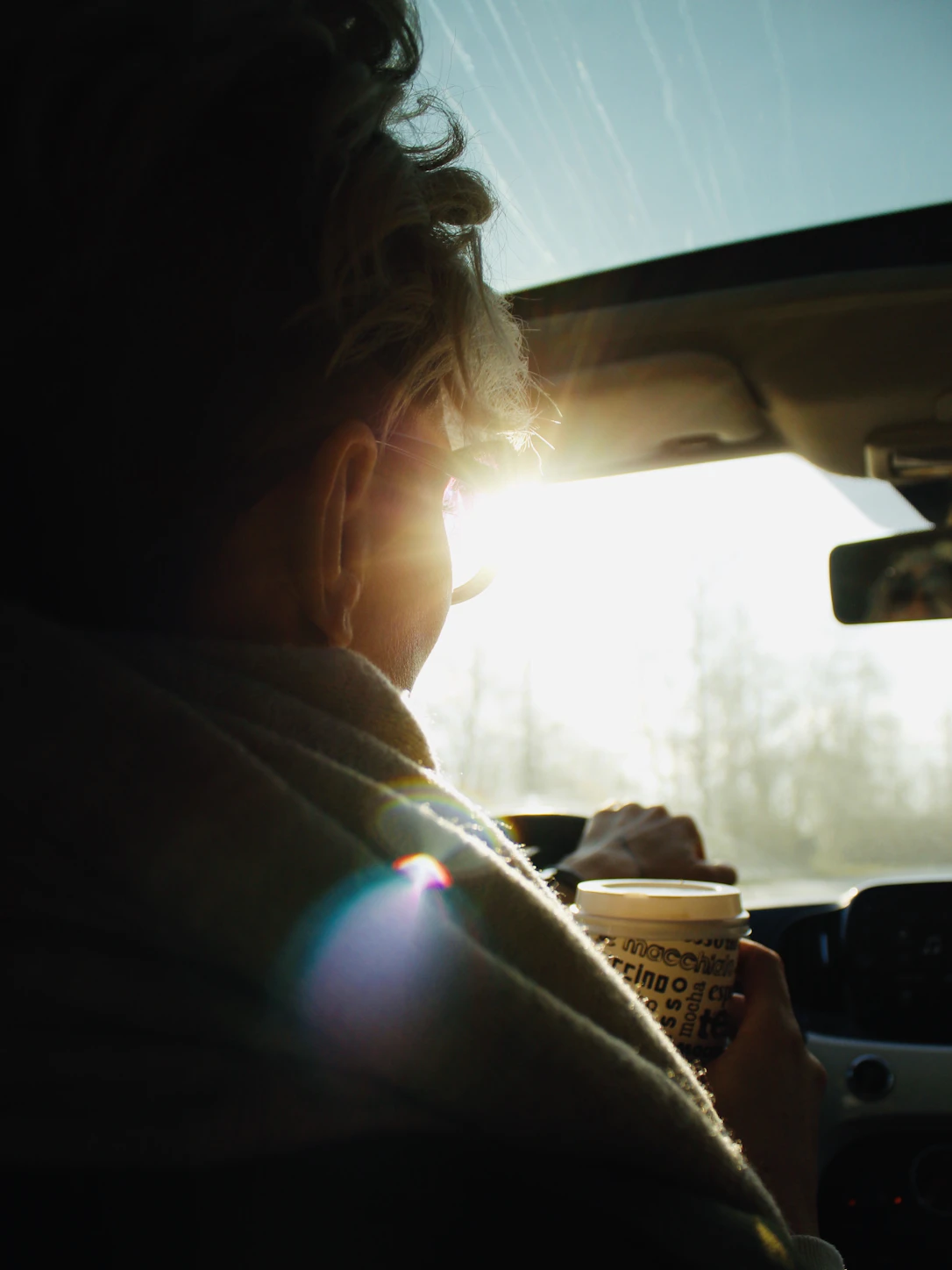
A cooler cabin before the drive home.
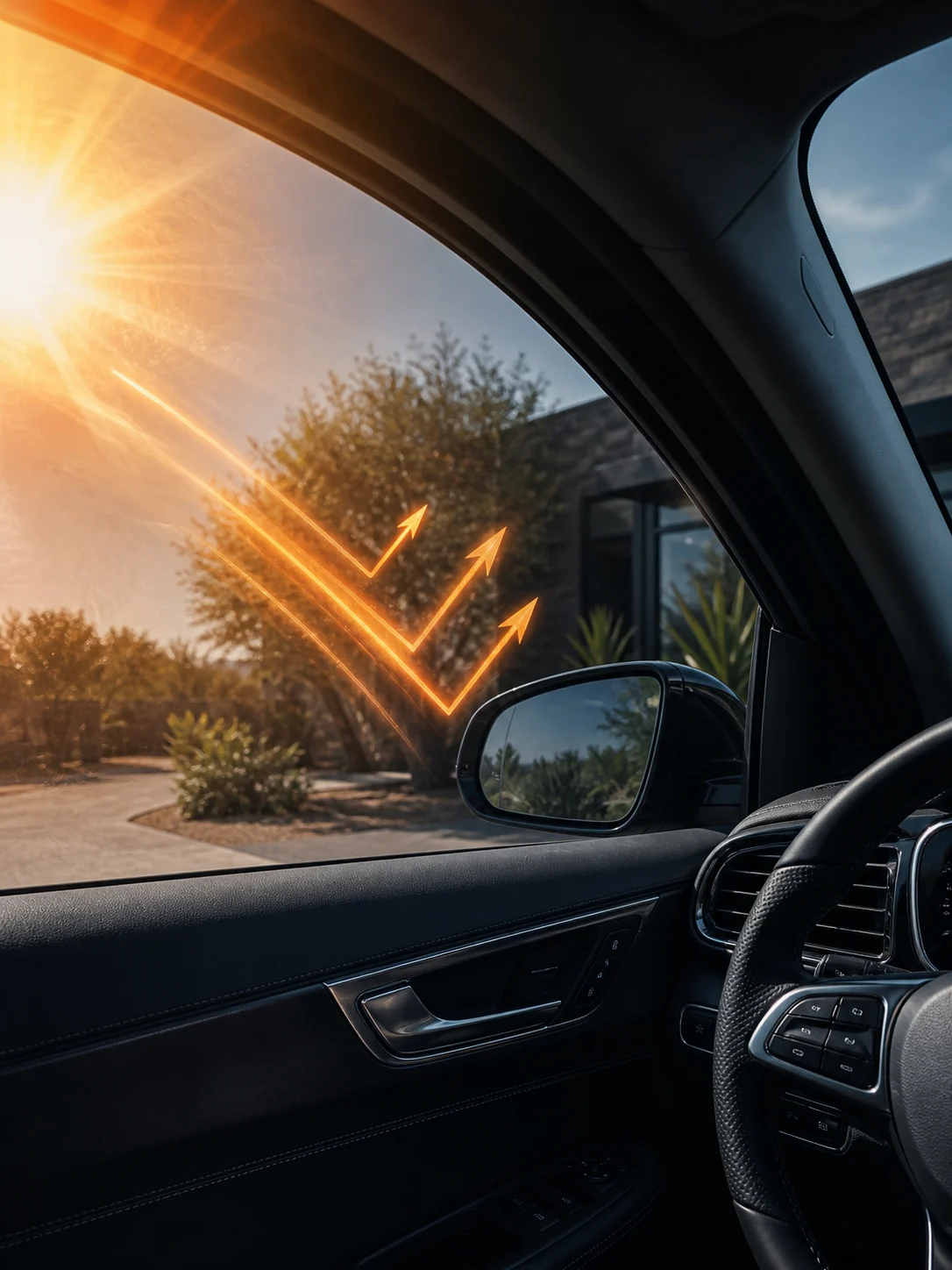
Ceramic film turns back the infrared heat that bakes the dash, the wheel and the seats while the car sits in a parking lot all afternoon.


Carbon and ceramic tint · Portland, Oregon
Choose Union carbon or ceramic film for your vehicle. We will help you compare shades and check the legal requirements for your glass.
Tinted here weekly
Why drivers tint
Tint used to mean picking one outcome and living without the rest — dark but hot, or cool but mirrored. Modern ceramic film brings all four reasons people tint into a single layer of glass.
Heat
Ceramic film turns back the infrared heat that bakes the dash, the wheel and the seats while the car sits in a parking lot all afternoon.
Privacy
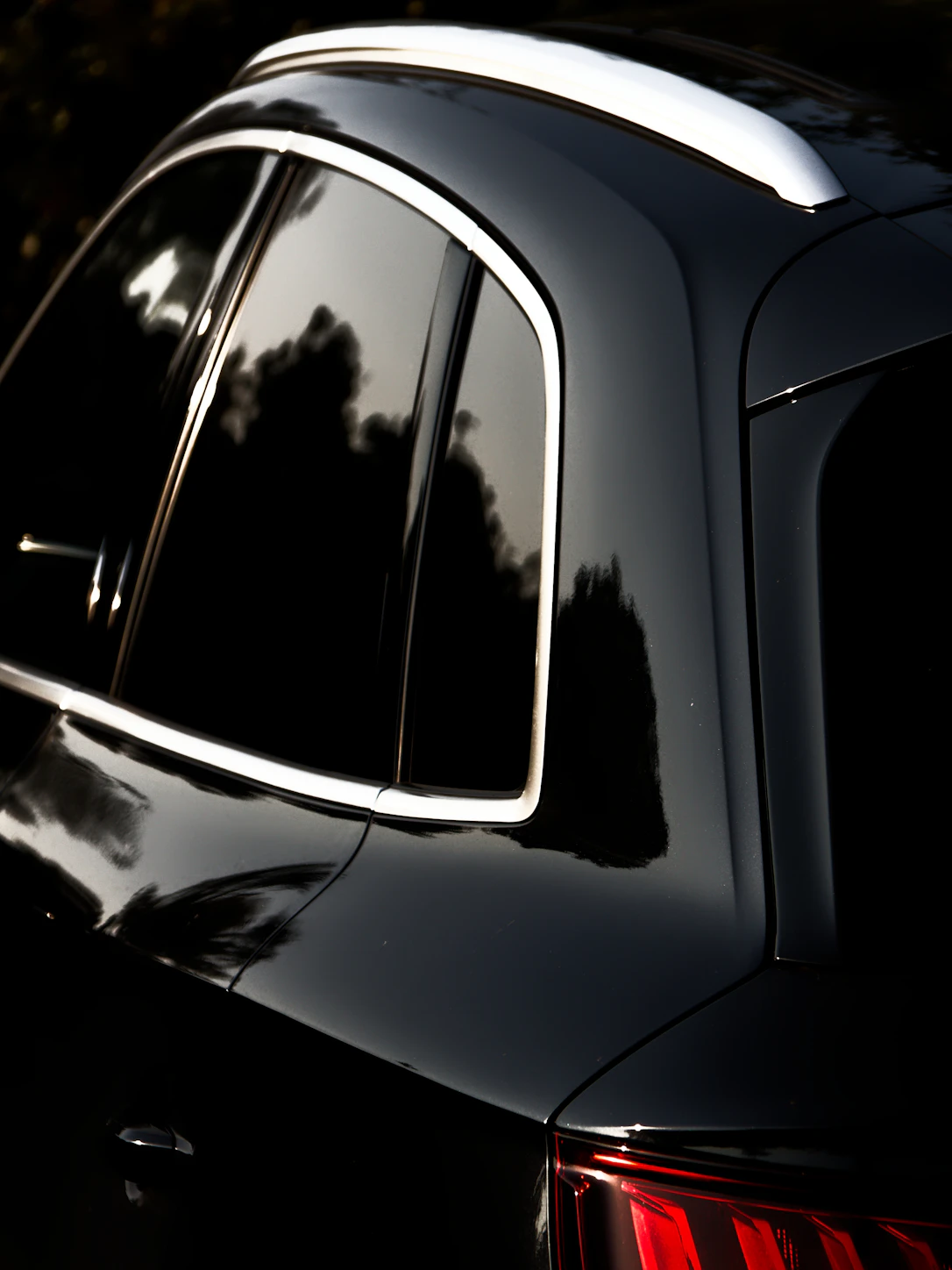
Bags, tools, car seats and everything else in the cabin stop being a display window every time you pull up at a light.
UV protection
The rays that fade a dashboard and crack leather are the same ones landing on your arm every commute. Every shade we fit blocks them.
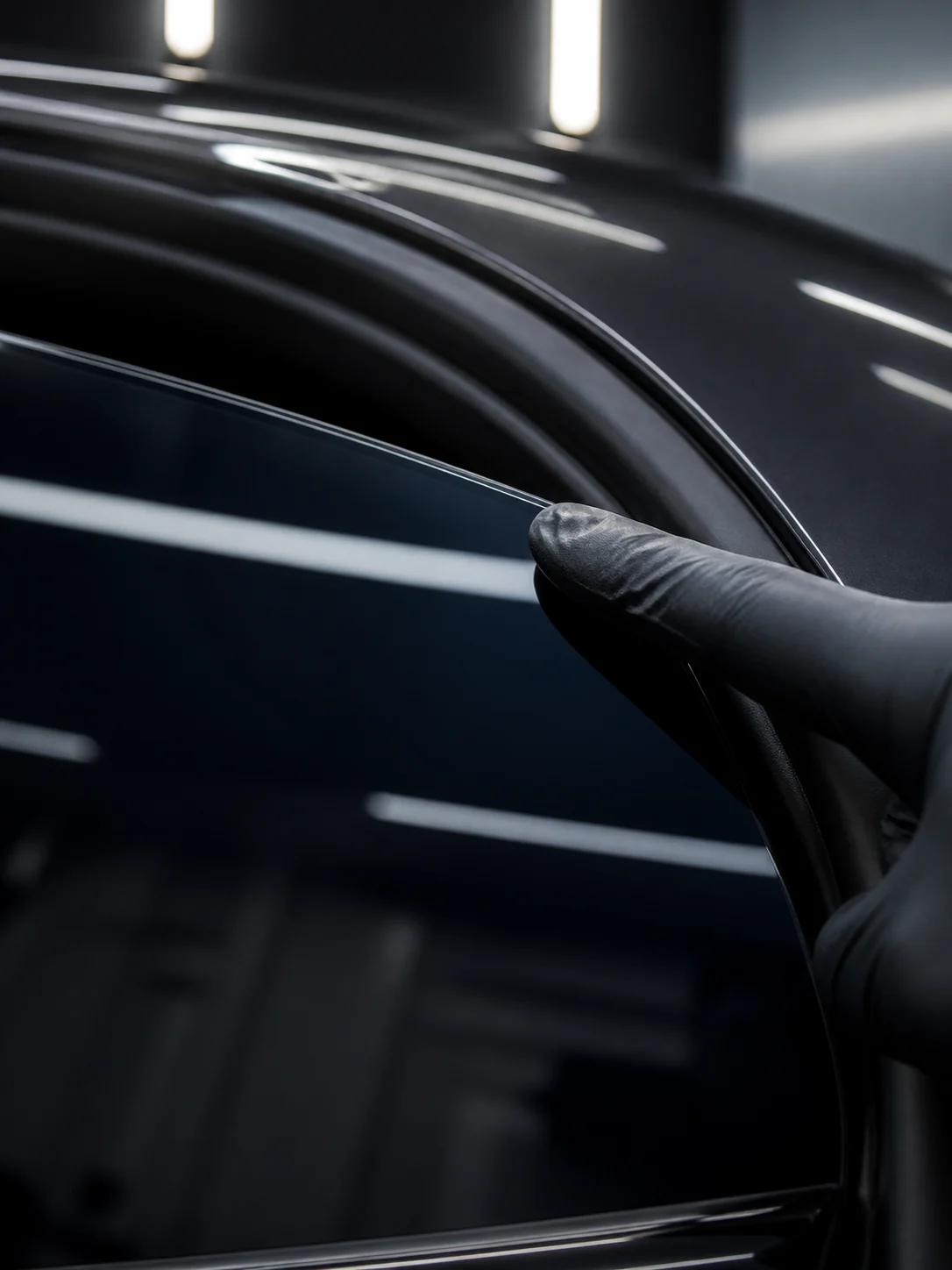
Finish
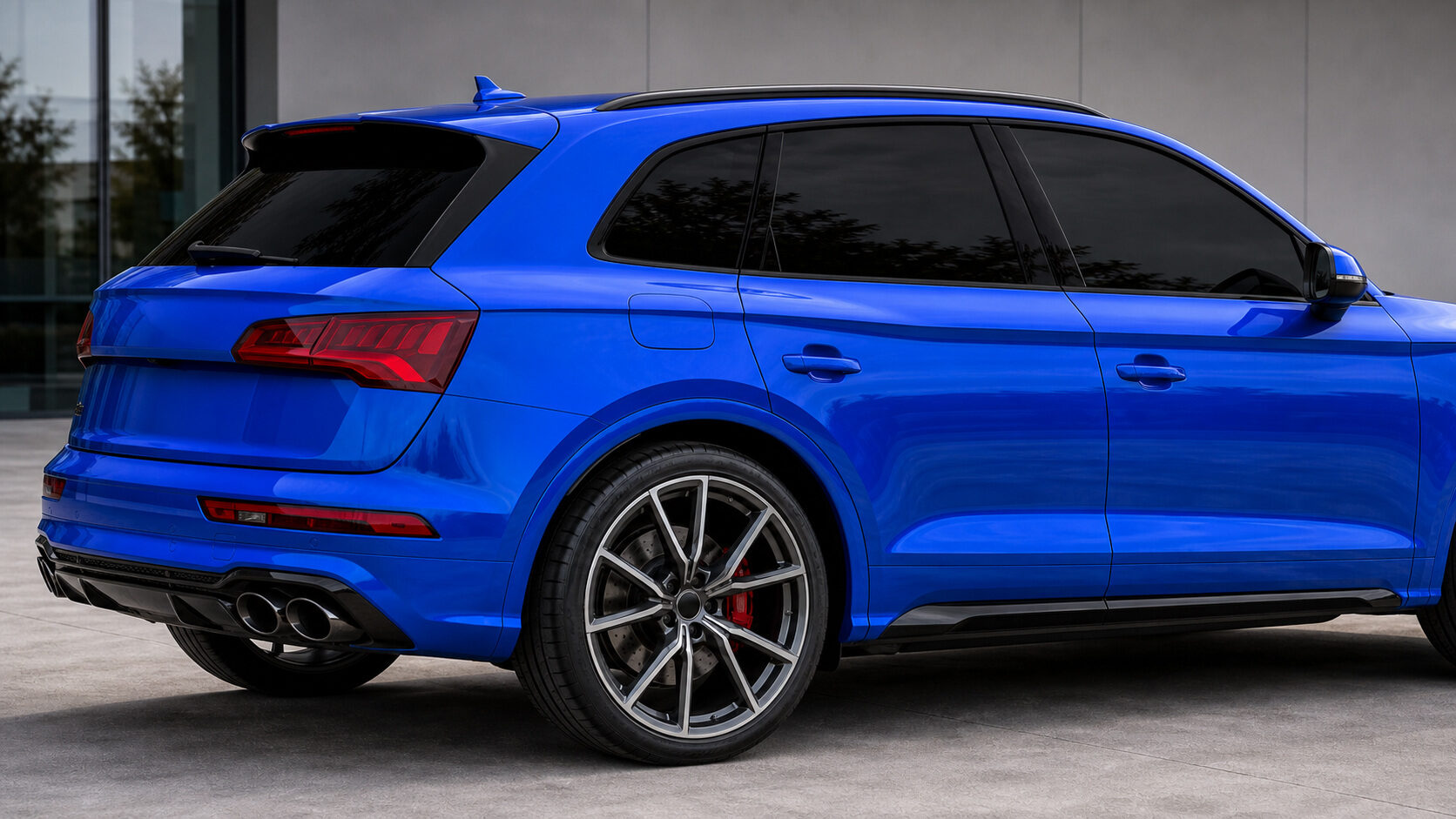
An even shade across every window, edges cut to the real glass profile, and a side profile that looks like it left the factory that way.
Film shade options
Every option is Union Window Films film, carbon or ceramic — only the amount of light it lets through changes. Drag the handle across the glass to see the shade land, and we’ll sanity-check your choice against your own car and Oregon law before anything is cut.
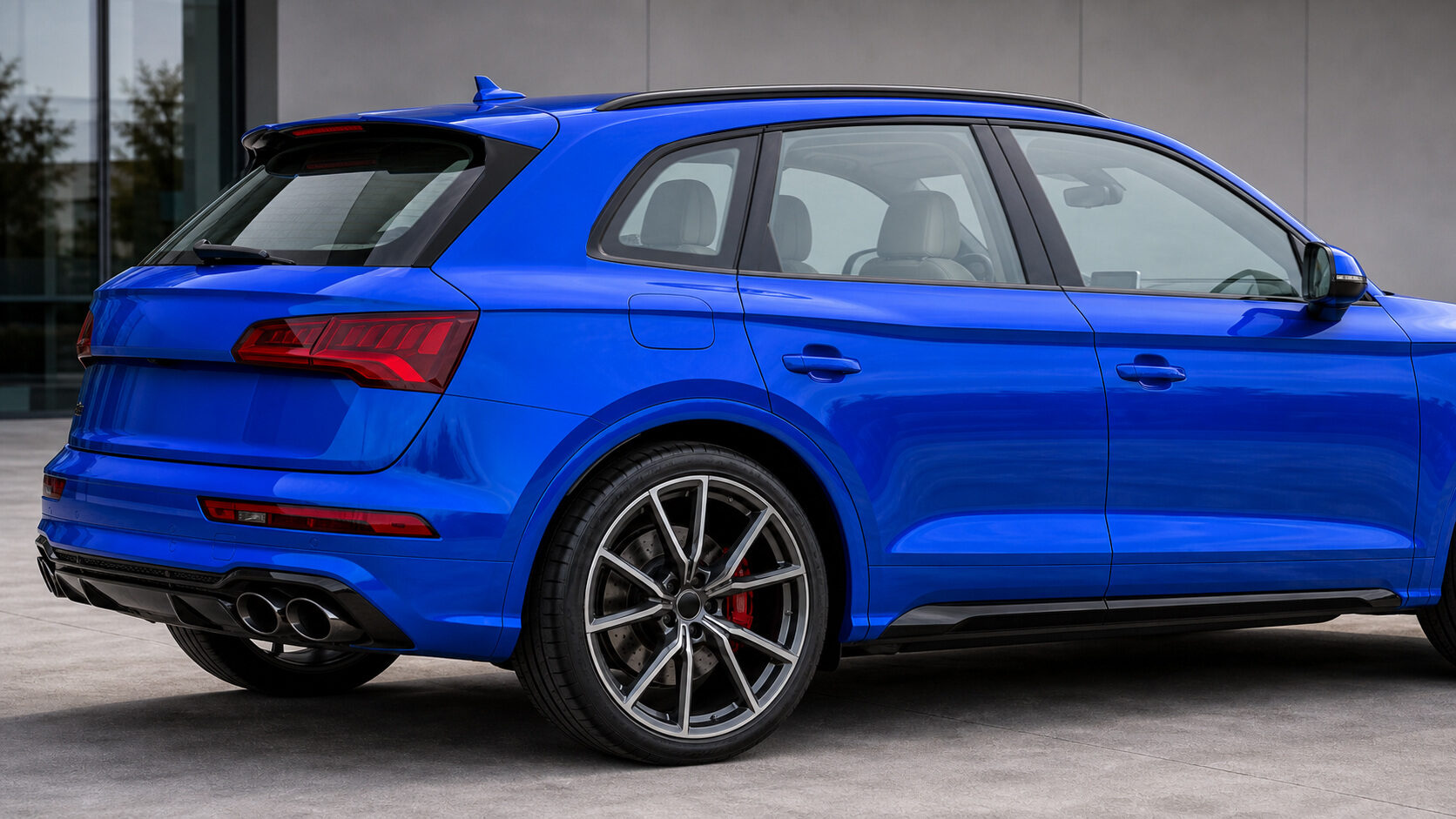
Oregon asks for at least 35% VLT on every side window and the back window of a car; on SUVs, trucks and vans the glass behind the driver can go as dark as you like. Shade also reads differently on every car, so we check it on your glass before we cut.
Find your fit
A good tint choice balances comfort, visibility and the finish you like. Tell us which matters most and we can narrow down the glass and film together.
For commuting, school runs and long drives, discuss the windows that bring in the most glare and the cabin comfort you want.
Bring your make, model and current glass details.
Factory privacy glass and added film can look different. Compare the front and rear glass together before settling on a shade.
See samples on glass, as well as on a screen.
Ask about the solar-performance figures for the actual film being quoted. Shade describes light transmission; it does not tell the whole heat-control story.
Compare film specifications at similar shades.
Why choose us
Film is only half of it. What separates a tint that still looks right in five years from one that bubbles by next summer is the room it goes on in, the prep before it, and who is accountable when something isn’t perfect.
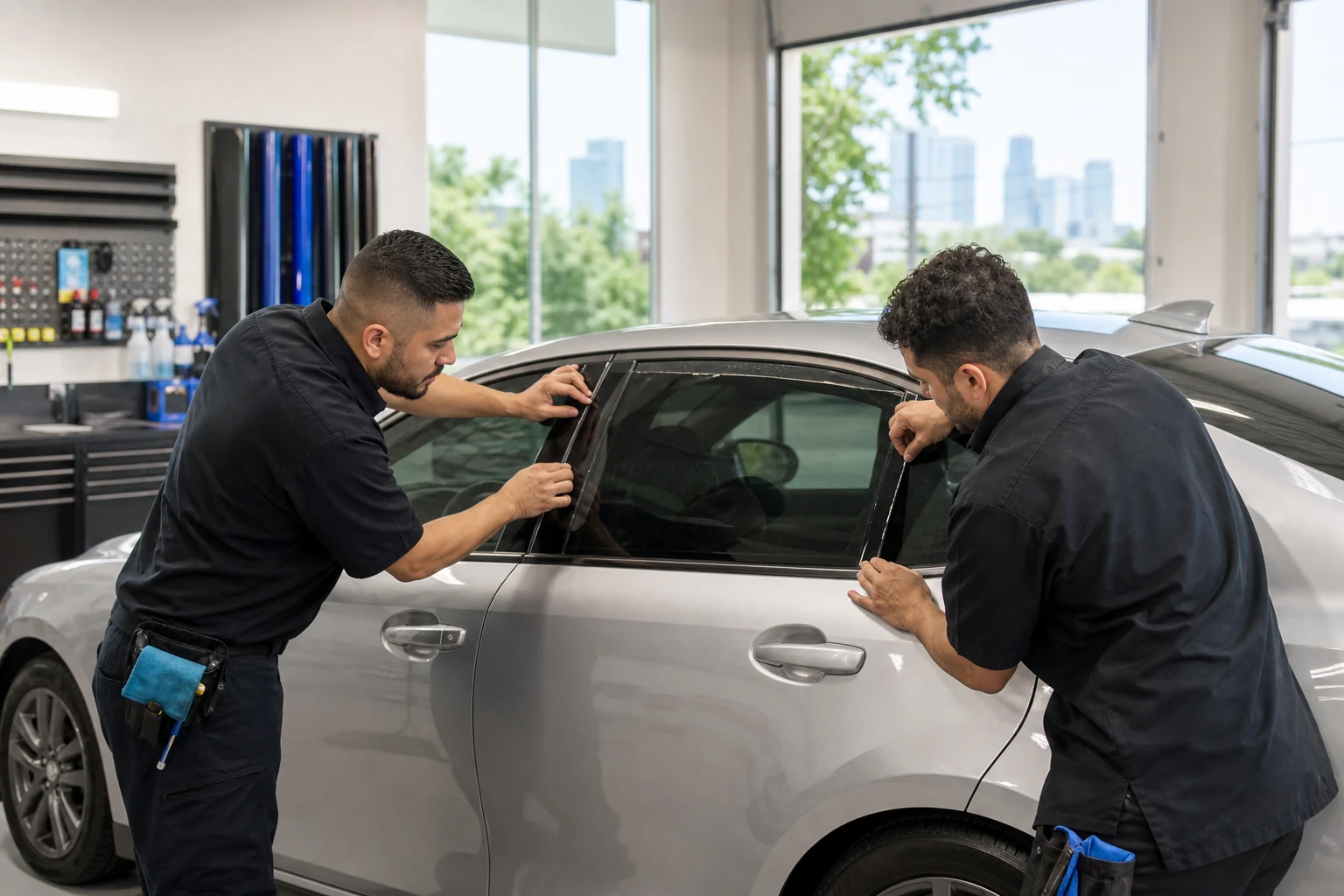
The person who quotes your car is the person who preps the glass and hands the keys back. Nothing gets passed to a subcontractor down the road.
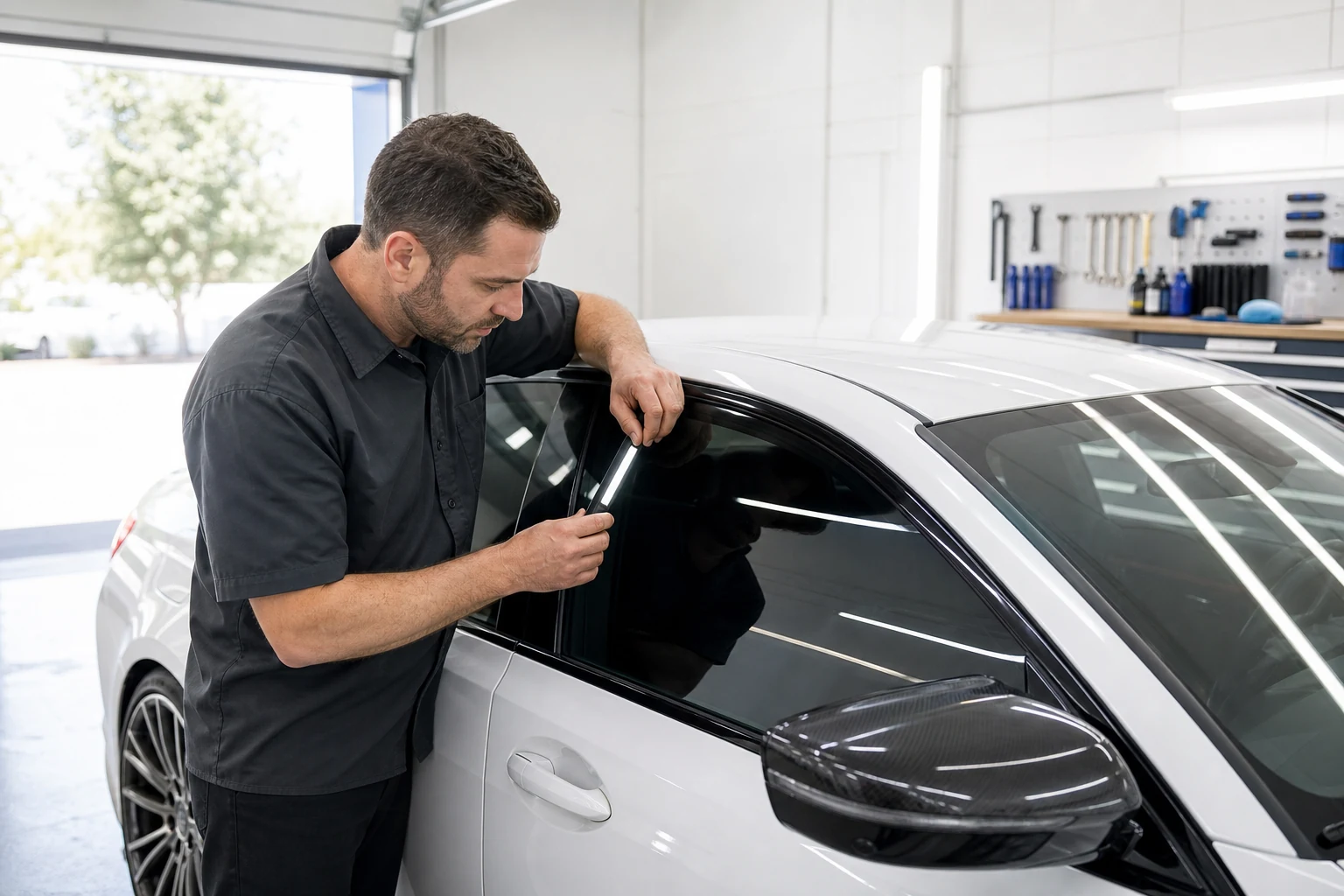
We fit to the standards dealerships ask for — the same patterns, the same prep, the same sign-off — without the dealership handoff.
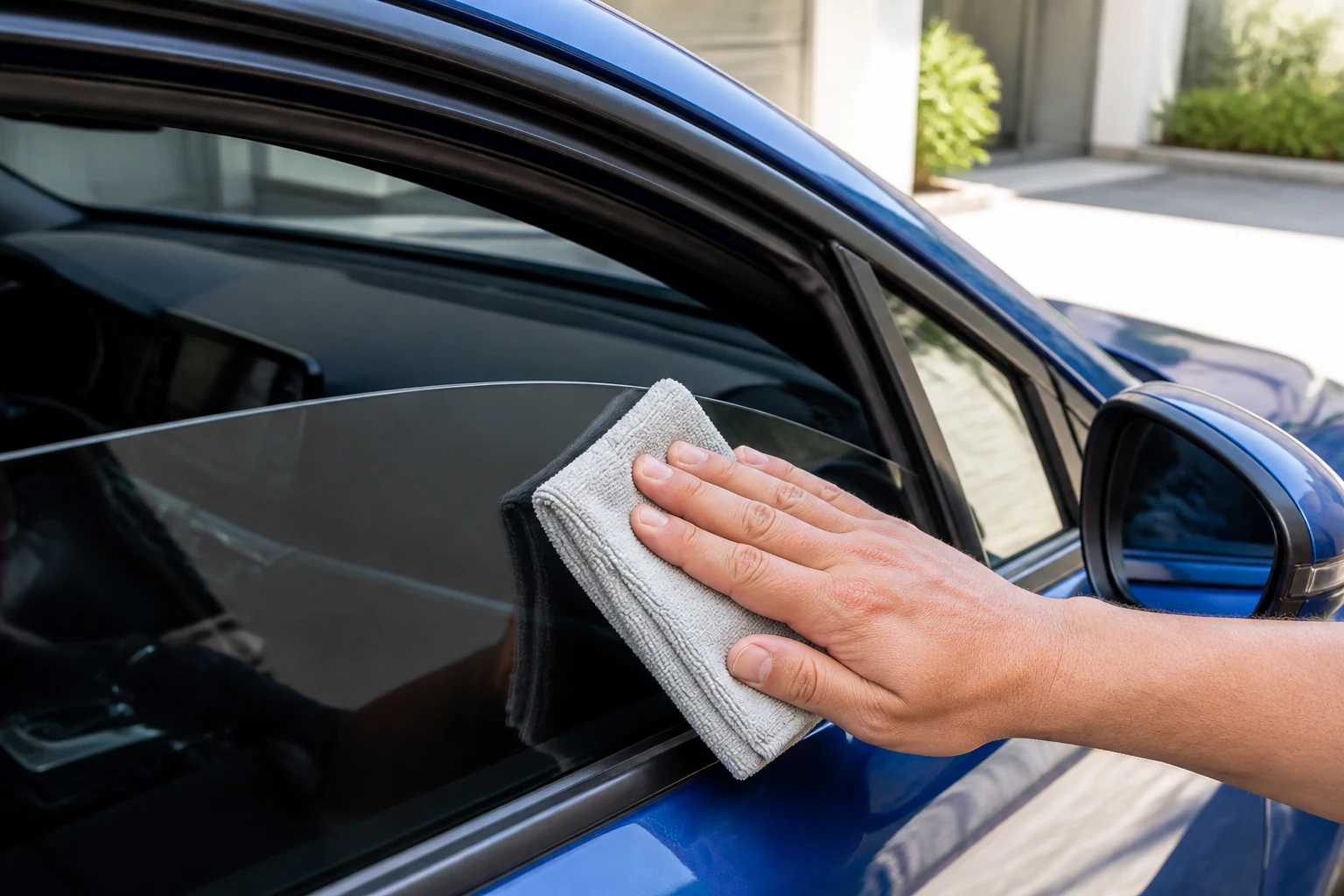
Ask which manufacturer and installation terms cover your selected film. We will explain the applicable paperwork before you book.
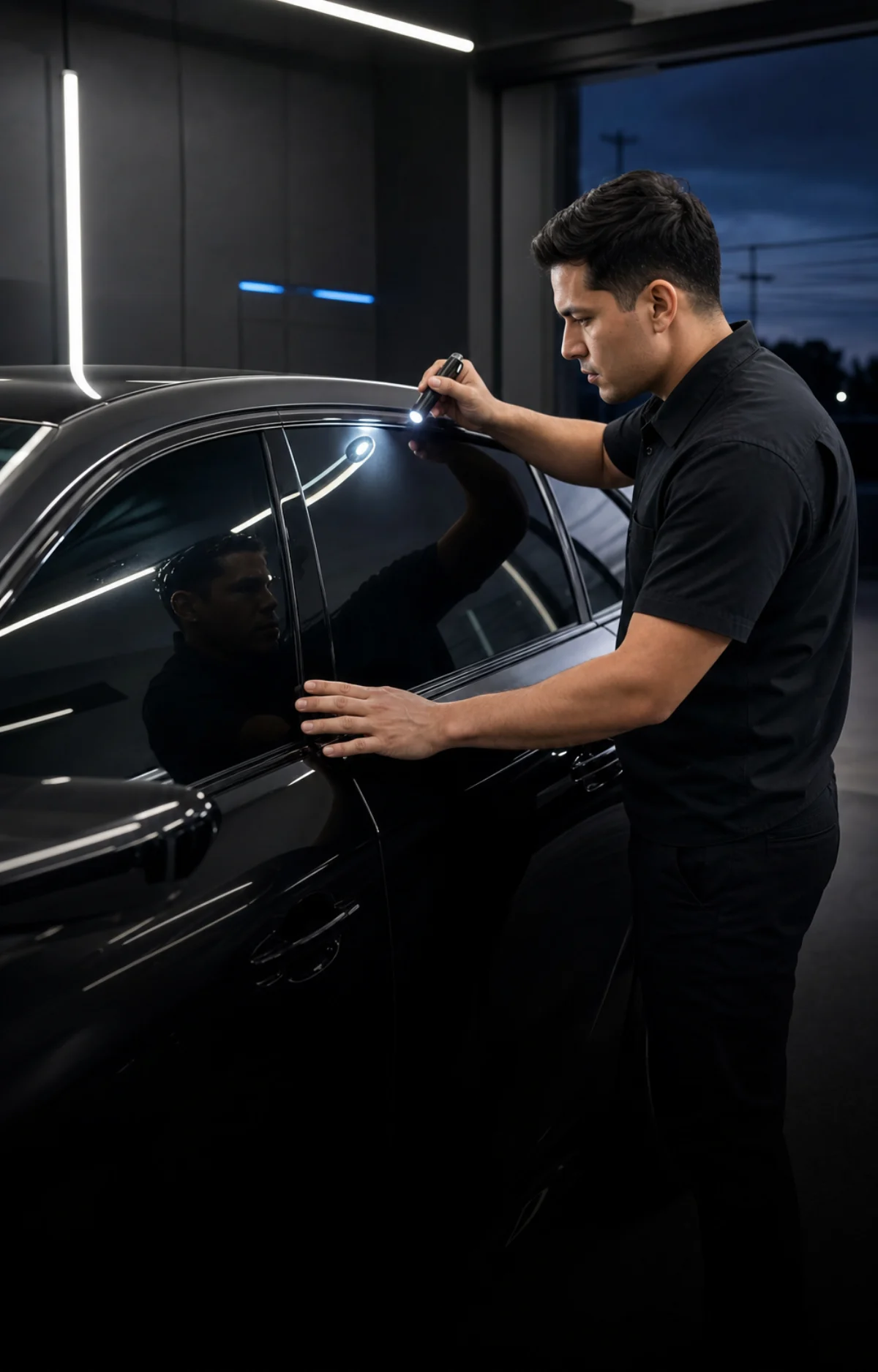
Go direct, locally
Booking tint through a dealership means paying for a handoff — they send the car to a shop like ours anyway. Coming direct removes a step, a markup, and the game of telephone about what shade you actually asked for.
Window films explained
Tint is sold by shade, but shade isn’t what separates a good install from a cheap one. What the film is made of decides how much heat it stops and how it looks three summers from now. None of these carry a metal layer, so your phone, toll tag and GPS carry on as normal.
Film type
Heat rejection
How it ages
Heat:Low
Aging:Fades toward purple
Heat:Strong
Aging:Stable, holds its color
Heat:Highest
Aging:Stable, clearest optics
Before you book
The vehicle, number of windows, chosen film and any old tint removal affect the quote. Send your make, model and year and tell us which windows you want tinted.
Compare samples with your existing glass and think about daytime and nighttime visibility. The film range and shade are separate choices; we’ll explain both and confirm suitability before installation.
Follow the drying and cleaning instructions supplied with your installation. The time depends on the film and conditions, so confirm when you can lower the windows and which cleaning products to use.
The warranty depends on the selected film and application. Ask for the manufacturer’s current coverage, exclusions and any registration requirements, along with the installation terms.
Free quote
Tell us the vehicle, which windows you want done and whether there is old film to come off. We’ll come back with your quote and the shades that are legal on its front windows.